 Virginia Invasive Species
Alligatorweed (Alternanthera philoxeroides)
What's the harm?
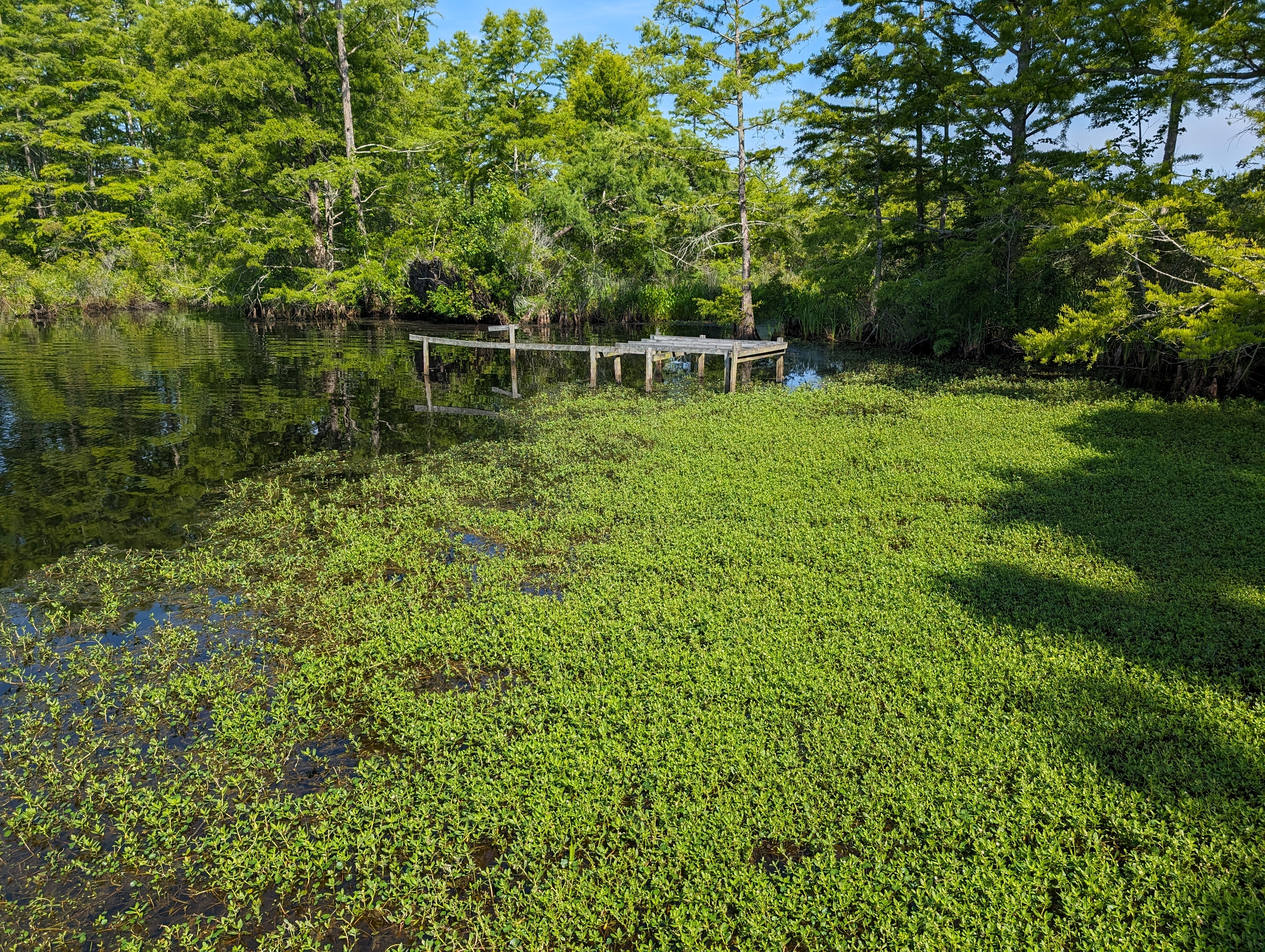
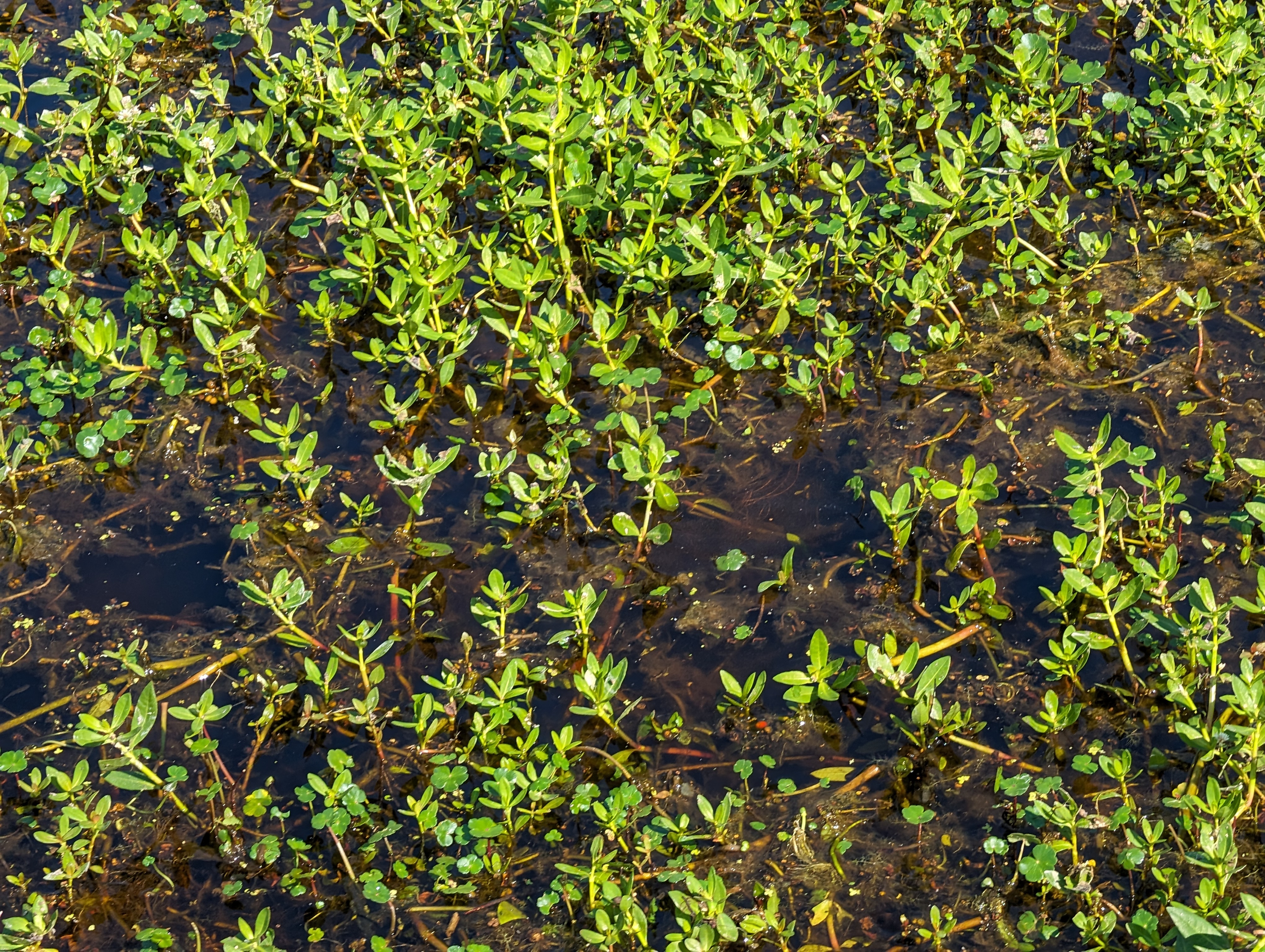
Alligatorweed forms dense tangled mats that float on the surface of a body of water. It overtops native aquatic vegetation and outcompetes it for sunlight, thus replacing desirable native species. It grows rapidly and spreads easily; stem fragments can float downstream and establish a new mat. The mats can block waterways, alter aquatic and riverine ecology, and increase breeding habitat for mosquitoes.
What is it?
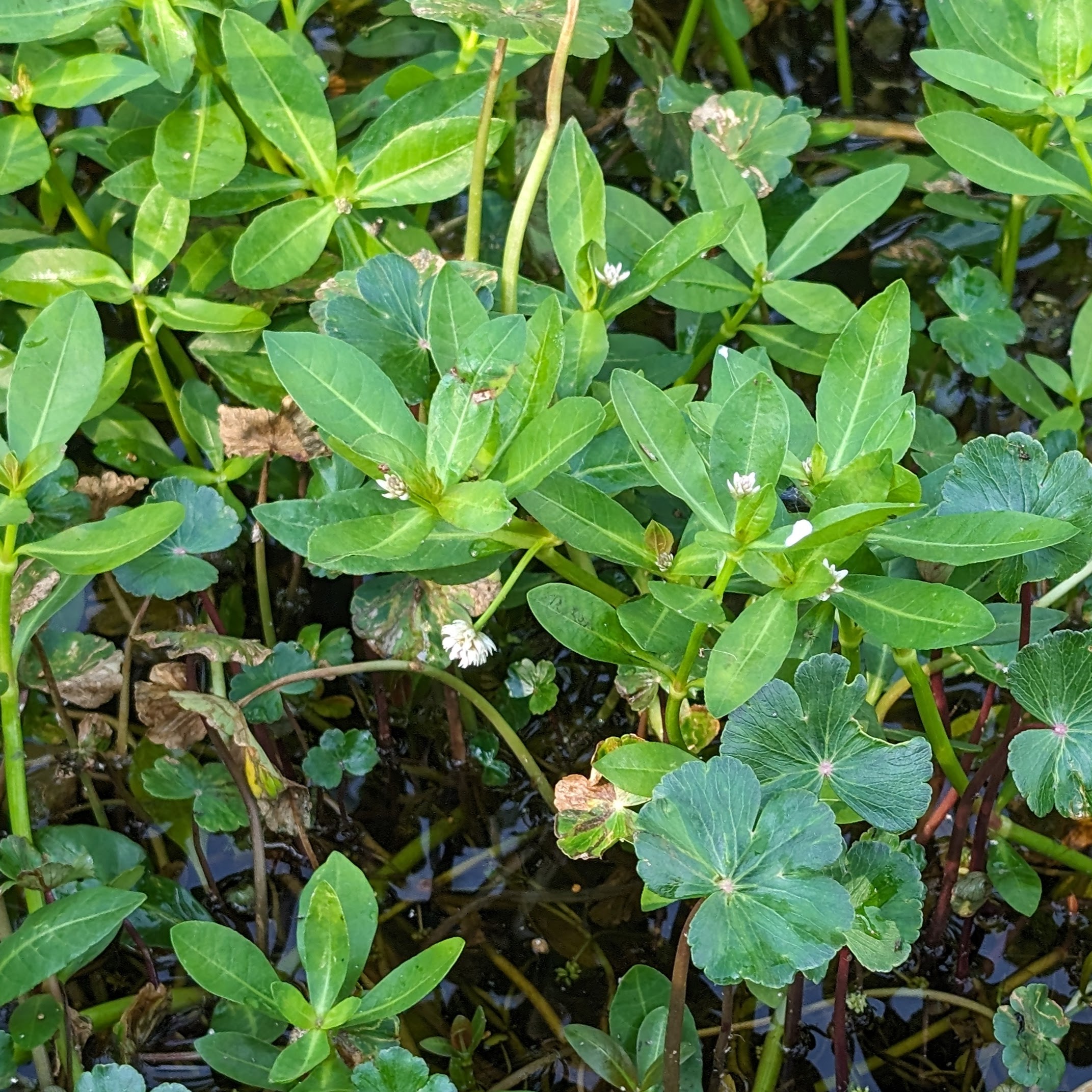
Alligatorweed, a member of the pigweed family, is a herbaceous perennial. Its leaves are opposite, elliptical, one-quarter to three-quarters of an inch in length with a very short or absent leaf stem. Alligatorweed roots on shore or shallow water. An emergent, which can also be partially or wholly terrestrial, its trailing stems form dense mats which grow out over the water's surface in thick interwoven mats. Hollow stems allow the plant to float. The mats may be up to three feet thick and may spread out over hundreds feet on the surface of the water. Flower spikes bearing very small flowers arise from leaf axils. No seedlings have been reported in the United States; it appears that reproduction here is vegetative. Stem nodes separated from the plant rapidly root and develop new complete plants.
Where's it from?
Native to South America, alligatorweed is believed to have been introduced to the United States as a “stowaway” in the ballast of a ship. It was first documented from Mobile, Alabama, in 1897. It is found in coastal states from Virginia to Texas, the Tennessee Valley and Puerto Rico. In the west, it is also a pest plant in California.
Where is it now?
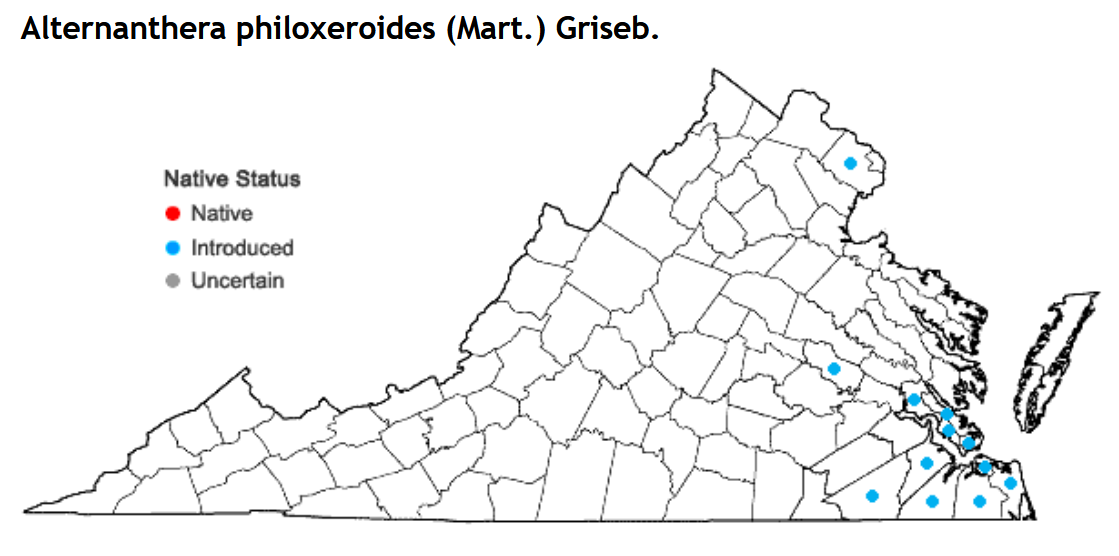
The Digital Atlas of the Virginia Flora has documented 12 localities with alligatorweed populations. It has invaded two National Wildlife Refuges in southeastern Virginia.
What's being done?
DCR has been conducting early detection and rapid response at two Natural Area Preserves in an attempt to prevent alligatorweed from establishing at those sites.
How do I report a sighting of these species?
You can choose from several ways to report sightings of an invasive species here >>
How can I learn more?
Download our fact sheet >>